Author: TPMD

  • Does a Breast Lift Leave Scars?

    Does a Breast Lift Leave Scars?

    A breast lift, also known as mastopexy, is a plastic surgery procedure that raises and firms the breasts. During a breast lift, excess skin is removed and breast tissue is reshaped to restore a more youthful contour and perky appearance. Many women seek a breast lift to address sagging, deflated breasts that can occur after pregnancy, weight loss, or as a result of aging.

    While a breast lift can dramatically improve breast shape, fullness, and position, the procedure does involve incisions around the breasts that will lead to some permanent scarring. However, when performed by a skilled plastic surgeon like Doctor Joseph M. Perlman at Advanced Plastic Surgery Centre, the scars from a breast lift are relatively minimal and fade significantly over time. Understanding the potential scarring is important when considering whether a breast lift is right for you.
    Breast Lift
    Breast Lift

    How a Breast Lift is Performed

    A breast lift is performed as an outpatient procedure under general anesthesia by board-certified plastic surgeon Dr. Perlman, who will make strategic incisions around your breasts and areolas to remove excess, sagging skin, and tighten and reshape the underlying breast tissue into a lifted position. There are four main techniques a surgeon may use for this surgery.

    • Crescent Lift: A small crescent-shaped incision is made along the top half of your areola. This allows for a mild lifting and reshaping of the breast with minimal scarring. It is usually done in combination with breast augmentation.
    • Donut Lift: Also known as a circumareolar lift, an incision is made around the entire perimeter of the areola to give the doctor access to reshape the entire breast tissue. It results in scarring around the areola edge.
    • Lollipop Lift: This involves a circular incision around the areola and a vertical incision from the bottom edge of the areola down to the breast crease. This allows for the extraction of extra excess skin for a moderate lift.
    • Anchor Lift: The most extensive lift option there is, this combines the donut incision around the areola with a horizontal incision along the breast crease. An anchor lift allows the removal of the most excess skin for significant lifting.

    Removing this excess sagging skin helps tighten the breast skin envelope to lift and support the breast in a higher and more perky position. Reshaping the underlying breast tissue can improve the breast contour by reducing or lifting enlarged or descended breast glands.

    The most appropriate incision technique depends on the degree of breast sagging, excess skin, and the amount of lift and reshaping desired by the patient. After removing excess skin, the remaining breast skin is sutured tightly in the lifted position, reshaping the breast mound as needed. The incisions are then closed with sutures, surgical tape, or skin adhesive.
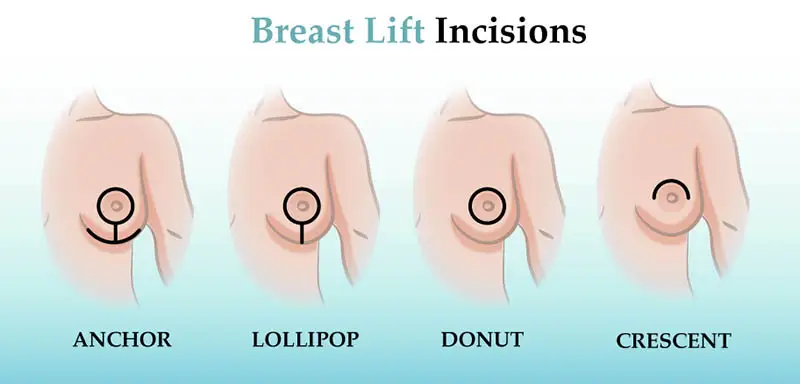
     

    Breast Lift Incisions

    What to Expect With Scarring After a Breast Lift

    Since breast lift surgery requires incisions around and on your breasts, there will be some degree of permanent scarring. However, when proper surgical techniques are used for incisions and closures, the scars you’ll have from a breast lift are relatively minimal. There are a few things you can expect with scarring on your breasts.

    • Incision Location: Scars will form along the incision lines made by Dr Perlman during your breast lift procedure. This may include scars around your areola edge, vertically down from your areola to the breast crease, and possibly along your breast crease.
    • Early Scarring: Scars will initially appear reddish or pink in the first 2 to 4 weeks after surgery as the incisions are healing. Some bruising and swelling may also be present initially. Proper wound care helps minimize your scarring during the recovery process.
    • Scar Fading: Around 6 weeks after breast lift surgery, your scars begin to fade in color and lose their redness. The complete maturation and fading of scars takes 12 to 18 months on average. Proper scar care and avoidance of the sun can help them heal optimally.
    • Mature Scars: Around 1 to 2 years after your breast lift, your scars often soften significantly and lighten to thin, pale lines. Mature scars are flat against your breast skin rather than thickened or raised above the surface.
    • Hypertrophic Scarring: In some cases, scars become thicker, wider, and more prominent, which is known as hypertrophic scarring. This is minimized when a skilled, highly-trained surgeon like Dr. Perlman uses very careful techniques to create minimal tension and trauma during incisions.
    • Scar Length: The total length and location of your scars correspond to the lifting technique used. A donut lift results in the shortest scar hidden along your areola border. The anchor lift involves the most extensive scarring to address significant sagging.

    While scarring is an inevitable part of breast lift surgery, scars often heal remarkably well and become barely detectable over time. Following proper aftercare for your scars can further minimize their appearance. Many of our patients feel the greatly improved breast shape they receive after a lift is worth the trade-off of mild scarring along natural contours.

    Contact Advanced Plastic Surgery Centre for a Breast Lift

    If your breasts have lost volume and firmness over time, a breast lift at Advanced Plastic Surgery Centre can restore a more youthful, uplifted contour. Schedule a consultation with our board-certified plastic surgeon today to determine if you are a good candidate. Call our office at 281-655-8200 or visit our website to get in touch with our welcoming staff!
    Frequently Asked Questions For Breast Lift Procedure

  • How Painful is a Breast Lift?

    How Painful is a Breast Lift?

    A breast lift, also known as mastopexy, is a popular plastic surgery procedure that raises and firms the breasts by removing excess skin and tightening the surrounding breast tissue. During a breast lift, the nipple and areola are also repositioned to a more youthful height and orientation on the breast.


    While the aesthetic results of a breast lift can be transformative by helping to restore a fuller breast contour, many women are understandably concerned about the potential pain and discomfort involved in the recovery process. Here we will discuss in detail what you can expect with regards to pain after a breast lift at Advanced Plastic Surgery Centre.

    Breast Lift

    Overview of the Breast Lift Procedure

    There are a few different techniques our board-certified plastic surgeon Dr. Joseph Perlman may utilize during a breast lift – depending on the degree of lift and firming you require. The most common is the anchor lift technique, which utilizes three incisions – one around the areola, one vertically from the areola down to the inframammary fold or breast crease, and one horizontally along the inframammary fold.


    A breast lift is performed to elevate sagging or uneven breasts and involves surgically removing excess skin and tightening the breast tissue to reshape and support the breasts. During the procedure, Dr. Perlman will make precise incisions, remove any excess skin for tightening, lift the breast tissue upward, and reposition the nipple and areola into a position that is higher up (and more youthful looking) on the breast. The mastopexy surgery usually takes two to three hours to meticulously complete under general anesthesia or local anesthesia plus intravenous sedation.


    After closing the incisions with sutures, the doctor will place soft surgical dressings and tape over your breasts to promote healing. You will then be taken to a recovery area where you will be closely monitored as you wake up comfortably from anesthesia.

    What to Expect with Breast Lift Pain Levels

    The amount of pain or discomfort experienced during the recovery period after a breast lift can vary significantly between individual patients. However, most women report the pain as manageable with prescription oral pain medication during the first week following surgery.


    Here is an overview of the typical pain levels and sensations at different stages of breast lift recovery.


    Immediately after surgery: It is normal to feel some pain and soreness in your breasts and incisions due to the surgical procedure and internal sutures. This initial pain is usually well-controlled with the intravenous pain medication that is administered during or just after surgery.


    First 1 – 3 days after surgery: The most significant discomfort is often felt within the first few days of your breast lift as the anesthetic wears off and peak swelling occurs. Pain during this time is often described as a generalized sore, stiff, or achy feeling in the breasts. Prescription oral pain medication taken regularly, as well as the application of cold compresses, can help effectively manage pain.


    The first week after surgery: Discomfort in your breasts gradually improves during the first postoperative week but some tenderness and pain are still common – especially with movements like raising or lowering the arms. Oral pain medication taken as prescribed will keep your pain under control during the first week.


    2 weeks after surgery: Around the two-week point after a breast lift, many of our patients report a noticeable improvement in their pain levels, with only mild to moderate soreness remaining. Pain medication is still often needed, especially before sleep.


    3 – 6 weeks after surgery: In the weeks following the two-week mark, your pain will continue to diminish in intensity. By 3 to 4 weeks any discomfort you may feel is usually minor and intermittent. Only the occasional use of pain medication may be necessary.


    6 – 12 weeks after surgery: By 6 to 12 weeks after surgery, any incision-related pain and tenderness has fully resolved for the majority of breast lift patients. Only mild, temporary soreness may be felt with vigorous stretching or activity at this stage.

    Breast Lift

    What Factors Can Affect Pain Levels After a Breast Lift?

    While the above provides a general overview of breast lift pain, it’s important to understand that specific pain levels and duration can vary significantly depending on individual factors.


    Surgical technique used: More extensive breast lifting with anchor incisions tends to involve more postoperative pain compared to a smaller crescent lift with fewer incisions.


    Degree of correction performed: Patients requiring a more considerable lifting and tightening of their breast tissue during mastopexy tend to experience greater residual pain and soreness.


    Individual pain tolerance: Everyone has a slightly different innate tolerance and threshold for pain, which affects their perception of and response to any discomfort.


    Compliance with post-op instructions: Closely following your plastic surgeon’s instructions for rest, medication usage, activity modification, and care of your incisions can help minimize normal pain during recovery.

    Tips to Help Manage Pain After Your Breast Lift Procedure

    While some pain is to be expected after any invasive surgery like a breast lift, there are ways to proactively help minimize your discomfort during the recovery process.


    • Take your prescribed oral pain medication regularly as directed, especially for the first 5 to 7 days. Don’t wait for severe pain before taking your medication.


    • Use cold compresses or ice packs on your breasts for 10 to 15 minutes several times a day. This reduces swelling and helps to numb discomfort.


    • Sleep propped up with extra pillows during the first week to reduce tension on your breasts.


    • Avoid lifting your arms over your head or doing any strenuous physical activity for at least 2 weeks.


    • Wear a soft surgical support bra around the clock as directed by your surgeon for comfort and gentle support.


    • Don’t allow your pain to escalate – if you need to, set alarms to remember when to take your next dose of medication.


    • Consider supplementary natural pain remedies like bromelain, turmeric, arnica, and vitamin C supplements.


    • Meticulously care for your incisions by keeping them clean and dry to prevent infection and irritation which can worsen pain.


    • Attend all scheduled follow-up visits with Dr. Perlman after surgery so he can monitor your progress and pain levels.


    What is the Recovery Timeline After a Breast Lift?

    While recovery from a breast lift procedure is a gradual process that occurs over several weeks, most of our patients report feeling notably better as each week passes.


    1 week after surgery: They are no longer reliant on prescription pain medication and can return to lighter administrative desk work. This is when the early stage of pain improvement begins.


    2 weeks after surgery: The incision sites feel less painful when changing dressings. Any stitches are removed at this time and the patient can resume very light activities like walking.


    4 weeks after surgery: Only moderate residual soreness around incisions is experienced when moving. There are noticeable improvements in swelling and discomfort.


    6 weeks after surgery: Most of our patients report minimal residual pain or discomfort at rest or with their normal daily activities.


    6 – 12 weeks after surgery: Full recovery with complete resolution of swelling, bruising, and incision-related pain or tenderness.


    Remember that following all the written post-operative instructions provided by your plastic surgeon is crucial to ensure proper healing and minimize discomfort throughout the recovery period.


    FAQs: Breast Lift Pain and Recovery

    How long does pain & soreness persist after a breast lift?

    Most of our patients have experienced manageable pain controlled with oral medication for 1 week. Residual soreness and tenderness continue to gradually improve over the next 4 to 6 weeks. Significant pain beyond 6 weeks is not typical if you are recovering normally.

    Which day is most painful following a breast lift?

    The first 24 to 72 hours tend to be the most painful period for most patients, as the anesthetic wears off and post-surgical swelling reaches its peak. The pain is often described as an intense sore, stiff sensation.

    What medications are typically prescribed for breast lift pain management?

    A combination of prescription medications like hydrocodone, as well as over-the-counter options like acetaminophen or ibuprofen are recommended for short-term pain control.

    When is it typically safe to resume normal activities after a breast lift?

    Light routine activities can often be resumed in 1 to 2 weeks but it is best to wait at least 4 to 6 weeks for adequate healing before performing any strenuous exercise or heavy lifting. Most patients need 6 weeks for complete recovery.

    What helps breast lift scars fade and mature best after surgery?

    Proper scar care, staying out of the sun, avoiding smoking, using scar treatments, and following all your plastic surgeon’s incision care instructions helps them heal optimally.

    Does a mastopexy help relieve back or neck issues caused by sagging?

    Yes, by elevating and supporting your breasts, a breast lift procedure can help alleviate chronic headaches, neck tension, and back pain caused by heavy, sagging breasts.

    About Advanced Plastic Surgery Centre: Your Trusted Breast Lift Specialists

    At Advanced Plastic Surgery Centre in Houston, Dr. Joseph Perlman has over 20 years of experience skillfully performing breast lift procedures and other cosmetic surgeries. He is dedicated to providing personalized treatment plans and achieving the most natural-looking results possible for every patient.


    We understand that deciding to undergo a breast lift is difficult. Our caring staff will take the time to listen and provide you with complete information to fully understand what to realistically expect for your recovery and pain management.

    Come in for Your Consultation Today!

    If you are considering a breast lift or have any other cosmetic concerns you’d like addressed, we invite you to schedule a personalized complimentary breast lift consultation with Dr. Perlman and view the before and after results from real patients. Email us or call 281-655-8200 today to get started.


  • Botox vs. Dysport

    Botox vs. Dysport

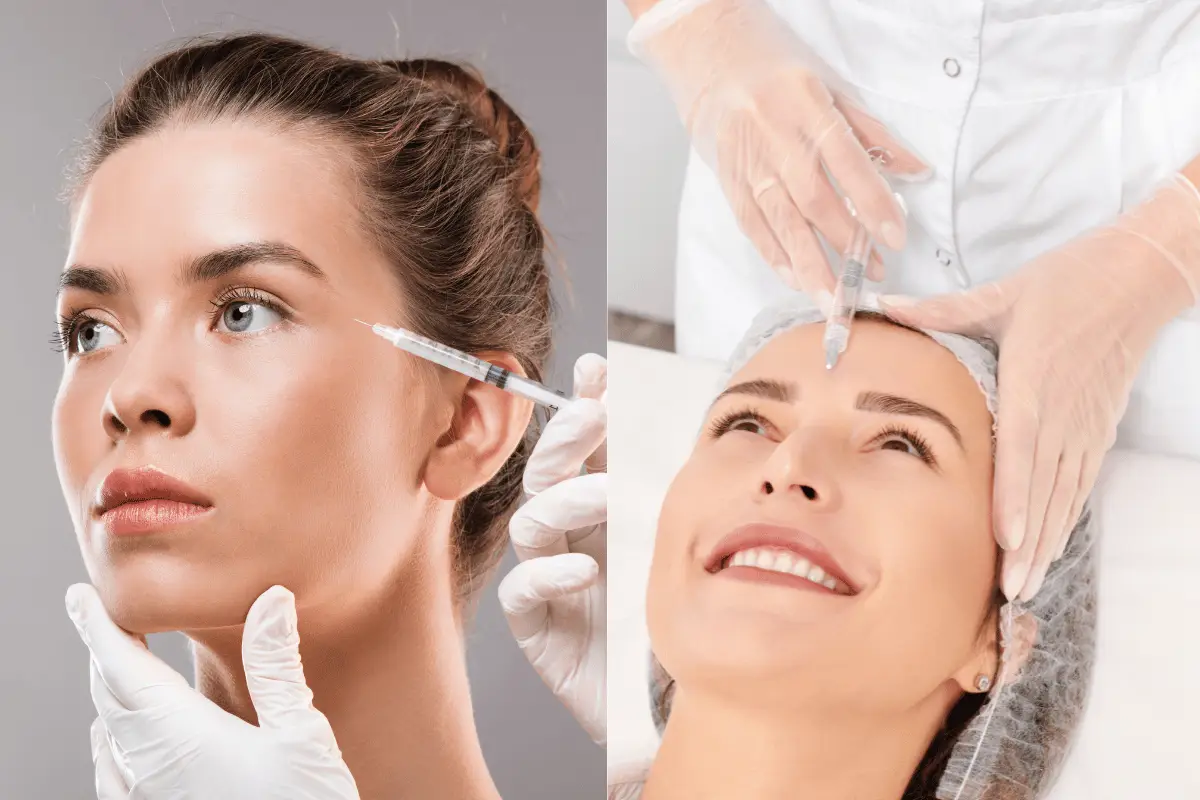
    When it comes to reducing the appearance of fine lines and wrinkles, there are various options available – particularly Botox and Dysport. Both of these treatments are injectable neurotoxins that work by temporarily paralyzing the muscles responsible for causing wrinkles in different areas of your face.  This helps your face to relax, thereby appearing more youthful and refreshed. While these injectables do essentially the same thing, there are some differences between the two, which is why we at Advanced Plastic Surgery Centre have created a list comparing Botox and Dysport. So keep reading to better understand them and select the best one for your treatment. Botox and Dysport comparison

    Botox vs. Dysport: What’s The Difference?

    When deciding between Botox and Dysport, it’s essential to both research for yourself and consult with a qualified and experienced plastic surgeon, such as Dr. Joseph M. Perlman at Advanced Plastic Surgery Centre.  His extensive expertise in both Botox and Dysport injections can help you determine which option is best suited to your specific needs.  

    woman closing eyes

    What Is Botox?

    Botox, which is short for Botulinum Toxin Type A, has been around for several decades and is one of the most well-known and widely used injectables in the cosmetic industry.  It has been approved by the FDA for the treatment of various facial wrinkles, such as frown lines, crow’s feet, and forehead lines. 
    • Botox is typically chosen for more precise treatments, like the delicate areas around the eyes. 
    • Botox is known for its effectiveness and long-lasting results, with effects typically lasting for three to six months.
    • Botox typically takes a few days to a week to show its full effect.

    beautiful aged woman smiling

    What Is Dysport?

    Dysport, on the other hand, is a newer product that was approved by the FDA in 2009. Like Botox, Dysport is made from Botulinum Toxin Type A and is used to treat facial wrinkles. However, Dysport is said to have a quicker onset, with results appearing within a few days – unlike Botox, which may take up to a week. 
    • Dysport has a greater diffusion spread, meaning it can cover a larger treatment area with fewer injections (advantageous for areas such as the forehead). 
    • The faster effects are typically appealing to individuals looking for immediate results.
    • It is typically priced lower per unit when compared to Botox (bear in mind, the number of units per treatment varies by individual needs).
    Remember that no matter whether you choose Botox or Dysport, it’s crucial to follow all post-treatment care instructions provided by your plastic surgeon to minimize any potential risks. 

    Which is Better: Botox or Dysport?

    While Botox and Dysport are generally safe and well-tolerated, there can be some side effects, such as temporary bruising, redness, or swelling at the injection site.  Both Botox and Dysport are effective treatments for reducing fine lines and wrinkles.  The choice between the two usually comes down to factors such as personal preference, desired results, and through a consultation with Dr. Perlman.

    We’ve Got It All

    One of the key reasons why individuals choose Advanced Plastic Surgery Centre for their Botox or Dysport treatments is the expertise and professionalism of our practitioners.  Our clinic is staffed by highly trained and experienced professionals who have extensive knowledge of cosmetic injectables. Moreover, our team is dedicated to ensuring your comfort and satisfaction throughout the entire process.

    Contact Us to Learn More

     If you are considering Botox or Dysport treatments, look no further than Advanced Plastic Surgery Centre. With our expertise, personalized care, and wide range of services, we are confident that you will be delighted with not only the outcome of your treatment but your experience as a whole.  Schedule a consultation with us now and take the first step toward rejuvenating your appearance today.

    Frequently Asked Questions

  • Does Botox Reduce Sweating?

    Does Botox Reduce Sweating?

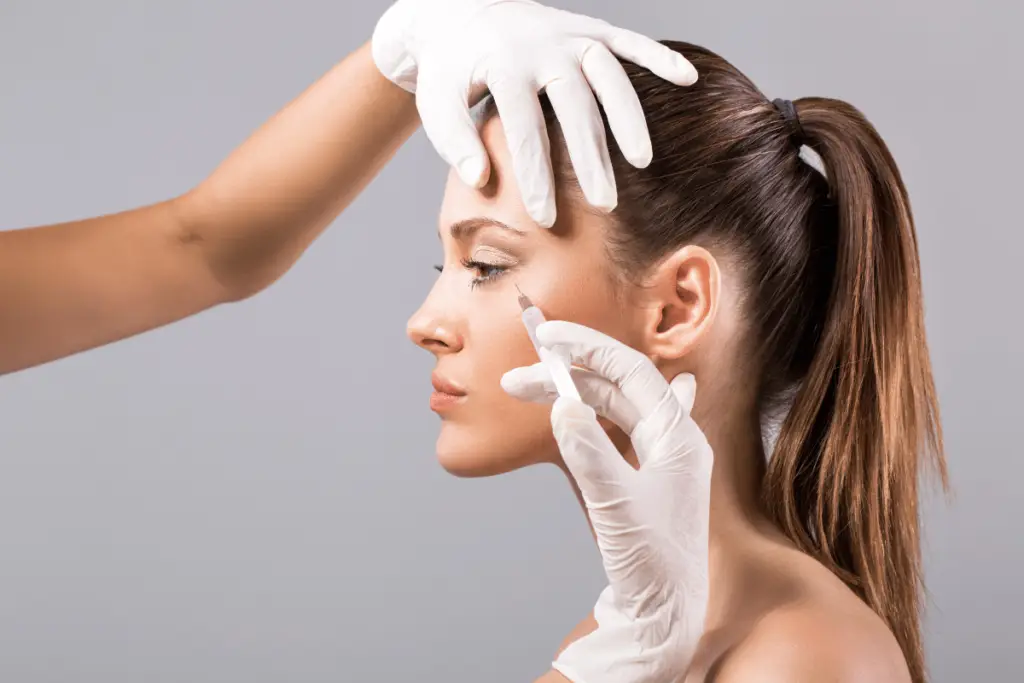
    botox treatment Botox is a cosmetic injectable primarily known for its ability to reduce the appearance of fine lines and wrinkles, but did you know it can be used to treat other issues? In addition to its cosmetic uses, it is a common treatment for hyperhidrosis – a condition that causes excessive sweating.  At Advanced Plastic Surgery Centre in Spring, TX, we offer Botox treatments to help patients reduce sweating. Keep reading to find out how it works.

    How Does Botox Reduce Sweating?

    When injected into targeted areas, Botox helps to inhibit the production of sweat by temporarily blocking the nerve signals that stimulate the sweat glands, effectively reducing – or even eliminating – sweat production in that location for several months.  Commonly targeted areas include the underarms, palms, and soles of the feet. Botox is approved by the FDA for the treatment of hyperhidrosis and our skilled and experienced plastic surgeon, Dr. Joseph M. Perlman, is well-versed in administering the injectable for this purpose. 

    woman sweating from exercise

    Why Treat Hyperhidrosis?

    Hyperhidrosis can be an embarrassing and frustrating condition to deal with. It can negatively impact a person’s confidence and self-esteem, as excessive sweating can occur even in situations where it is not warranted, such as in cool temperatures or when you are inactive.  Traditional methods of managing excessive sweating, like antiperspirants or medication, may offer some relief but often fall short of providing a long-lasting solution.

    What to Expect During & After Treatment

    During your procedure, we will inject a small amount of Botox into the targeted area using a fine needle. The treatment is relatively quick and minimally invasive, with most patients experiencing little to no discomfort.  The effects of a single Botox treatment in reducing sweating can last for several months, and repeat treatments may be necessary to maintain the desired results.  After your treatment, you may experience some mild discomfort or bruising, but these side effects are temporary and typically resolve on their own within a few days.  The full effects of the Botox treatment will be noticeable within 1 to 2 weeks, and the results can last from 4 to 12 months, depending on the individual and the severity of their hyperhidrosis.

    Are You Considering Botox to Reduce Sweating?

    If you struggle with excessive sweating and are interested in our Botox treatment, we invite you to schedule a consultation with Advanced Plastic Surgery Centre.  Dr. Perlman can evaluate your condition, discuss your goals and expectations, and determine if Botox is a suitable option for you. He will discuss the procedure and address any concerns or questions you may have.  woman smiling

    About Advanced Plastic Surgery Centre

    At Advanced Plastic Surgery Centre, we don’t just have expertise in this unique application of Botox, we also make sure to provide a comfortable and supportive environment for our patients.  We understand the impact that excessive sweating can have on your quality of life and are dedicated to helping you regain your confidence and improve your overall well-being. In addition to Botox for sweating reduction, we also offer a wide range of cosmetic procedures at our state-of-the-art facility.  From facial rejuvenation treatments like chemical peels and facelifts to breast augmentation, tummy tucks, and mommy makeovers, Dr. Perlman and our team are dedicated to helping you achieve your aesthetic goals and boost your confidence.

    Contact Us Today 

    If you’re tired of dealing with excessive sweating and want to explore a long-lasting solution, know that we at the Advanced Plastic Surgery Centre offer Botox treatments that can help you.  Contact our expert team today to schedule a consultation and take the first step toward reducing sweating and regaining control over your life. Don’t let hyperhidrosis hold you back any longer.

    Frequently Asked Questions