
Category: Blog

  • Mommy Makeover

    Mommy Makeover

    Mommy Makeover

    Pregnancy is a beautiful thing. A woman glows and bonds to the child she carries for nine months and then delivers. This miracle can happen for most women multiple times with relatively low risk for the mother and her children.

    The only downside to this amazing cycle is what happens to mom afterward, and how her body changes.  Multiple births and fluctuations in weight will ultimately lead to saggy breasts. Whether you have a C-section or go through natural childbirth, the stomach wall will loosen, and excess skin will hang down. Any extra weight gain might hang around due to hormonal changes and just basic body chemistry. These types of changes have led healthy, youthful women to want to regain some of their pre-pregnancy figures. Hence, the birth of the Mommy Makeover.

    What is a Mommy Makeover?

    The Mommy Makeover is an increasingly popular procedure that usually combines breast surgery (augmentation, reduction, or a lift) with a tummy tuck and liposuction where needed.  Mommy Makeovers focus on all the problem areas after pregnancy.  The procedure actually targets problem areas most women have as they age, even without giving birth. The main culprit is gravity, weight gain, and then weight loss.  These affected areas leave loose skin no matter how hard you diet and work out.

    Why and when do I do it?

    In the breasts, gravity and an increase or decrease in volume could really cause a lot of havoc. If there is a large increase in size, you may have trouble carrying the extra weight and will need a breast reduction and then a lift. If you lost volume and there is sagging, then a lift or a breast augmentation with a saline or silicone implant might be appropriate.

    Some women even choose to have surgery before pregnancy.   This is completely fine because implants and surgery do not usually affect breastfeeding. Also, having a revision or another breast surgery after pregnancy is normal, and depending on the timing, could be a good option for maintaining your implants and breast health.

    An abdominoplasty (or tummy tuck) will help you pull all the muscles and skin in your stomach area together. This is a procedure you want to have when you’re certain that you will not have more children. Like liposuction, it is best to have lost any extra baby weight and be a healthy size before undergoing this procedure. It is not a weight loss method, but instead, a way to contour your body, remove excess skin, and tighten areas that need it.

    Because a Mommy Makeover is designed to make a woman feel as if she has regained her body back, it could also include ancillary procedures such as female rejuvenation procedures or a lower body lift.

    Is the Mommy Makeover really popular?

    Statistics from The American Society for Aesthetic Plastic Surgery show that breast augmentation and liposuction are the top two surgical procedures nationwide while the tummy tuck isn’t trailing too far behind. The 35 to 50 age group is the largest for plastic surgery procedures. Women make up 90% of all procedures – so if we add up the math it’s clear: Mommy Makeovers are here to stay.

    What about the recovery and risks?
    In a recent news article, two women told their stories, which are very similar to the ones we hear in the office. They worked out and lost the extra baby weight, but were unable to do anything about the loose and saggy skin. After going to a qualified, board-certified plastic surgeon, who was also an ASAPS Member, and undergoing standard medical exams, they were cleared for surgery and got amazing results.

    These stories are becoming more and more common. Women want to feel good physically while raising their children and being active into the later years of their life. Many even say that they look the best they have ever looked after their Mommy Makeover.

    In that same article, one woman had already undergone two C-sections, which separated her muscles and left her stomach in bad shape. She already knew the struggle of healing from those two operations, so she figured she would do it all together so she wouldn’t have to recover twice. Also, she compared her Mommy Makeover recovery to her C-section recovery. It is similar – no heavy lifting for a few weeks, but then you can walk around after surgery and should be almost back to normal 4 to 6 weeks after surgery.

    Contrary to popular belief, it’s actually best to walk around after surgery. No lying around bedridden for weeks. It’s important to get up slowly and move around to help circulate the blood and avoid blood clots. However, more strenuous exercise and heavy lifting should be done with more caution – be sure to be cleared first by your doctor before starting anything intense.

    Patient Safety
    We see and hear from patients who have gone to an unaccredited clinic or MedSpa and received bad plastic surgery. It’s in the news and unfortunately shows up at our doorstep more often than it should. A Mommy Makeover is extensive surgery and all parts of the procedure require special training, experience, and sanitary conditions. Lack of any of those three and you could be open for infection, complications, or worse.

    Put yourself in the hands of an experienced and qualified board-certified surgeon.  Call Dr. Perlman’s office today at (281) 644-0013 to schedule your consultation!
  • Dermal Fillers – Avoid too much of a good thing

    Dermal Fillers – Avoid too much of a good thing

    Dermal Fillers

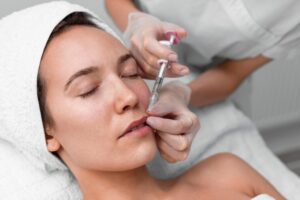
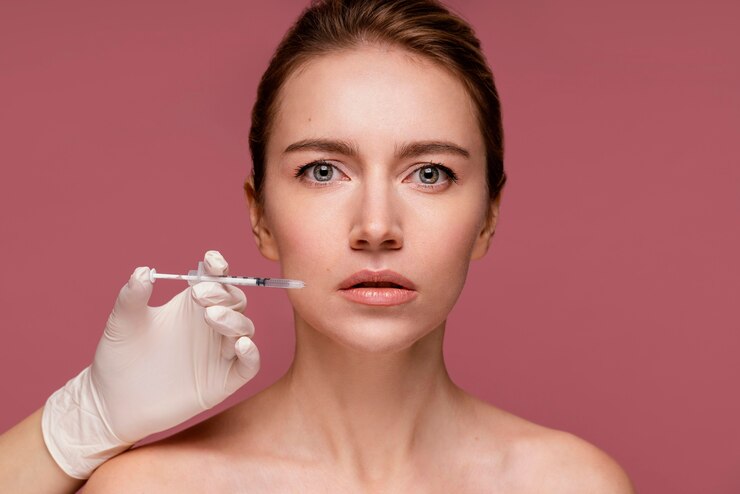
    Are you thinking about experiencing dermal fillers?  These products are used to restore a youthful facial appearance while helping to keep you looking like yourself at the same time.  A common brand name filler used by many surgeons is Restylane®.

    In the 80s and 90s, plastic surgery sometimes produced a pulled-tight surgical look.  Then came the ‘liquid facelift’, which did the opposite.  Injections of dermal fillers are now used to enhance cheekbones, jawlines, and lips. But, in many cases, instead of subtly enhancing features some women receive too much filler and become puffy and swollen-looking.

    Injecting dermal fillers correctly takes a combination of anatomical understanding, years of experience, and a sense of artistic shape.  Practitioners with these skills are usually board-certified plastic surgeons or dermatologists.   In today’s world, these qualified practitioners usually find themselves reversing too much of a good thing – usually finding too much dermal filler that was injected by an unqualified, or inexperienced practitioner.  To reverse this process, enzymes like hyaluronidase are used to break down or deflate the over-effects from fillers such as Restylane®, Juvederm®, or Perlane®.

    According to the January issue of Marie Claire, the year 2013 will usher in a subtler more conservative use of fillers. The article points to icons such as Diane Keaton, Lauren Hutton, and Meryl Streep. In these women, you can’t tell whether or not they’ve had work done. They look great, like themselves, and not like they’re trying to pass for 30. Marie Claire interviewed a prominent NYC plastic surgeon who recommends going to a cosmetic surgery consultation armed with photos of yourself throughout the years, so your doctor can see the original shape of your face and how it has aged over time.

    Before picking up the syringe, good plastic surgeons look at you long and hard by evaluating your 1) skin quality and texture, 2) tissue tone and thickness, 3) cheek and lip volume, 4) bone structure, and 5) how your face looks when animated and how it looks when still.

    An experienced, knowledgeable injector will avoid common mistakes such as these: adding volume to deep-set eyes can recess the eyes further and make them look smaller; overinflating nasolabial folds and marionette lines can take away midface structure, and overfilling cheeks can make the under-eye area appear hollow.

    Are you considering dermal fillers?  Put yourself in the hands of a board-certified plastic surgeon.  Dr. Perlman will help you to consider all aspects of dermal fillers and will proceed slowly and with accuracy.  Call our office today at (281) 644-0013 to schedule your consultation!
  • Botox Prevention Therapy – no longer just for the middle-aged

    Botox Prevention Therapy – no longer just for the middle-aged

    Botox Prevention Therapy

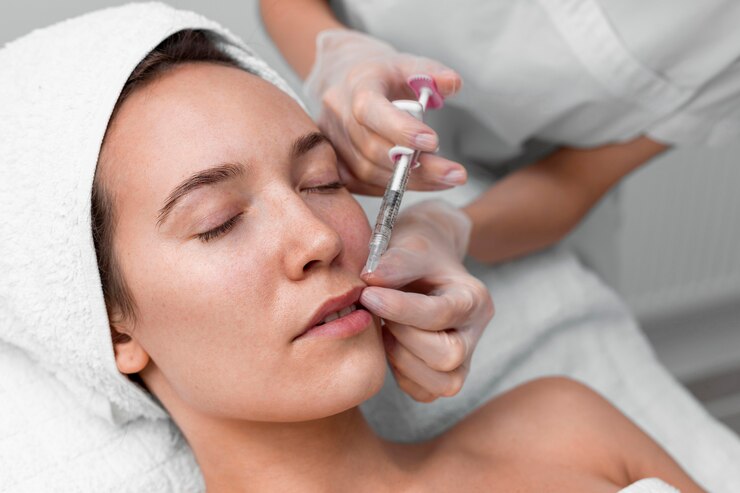
    Twenty-four-year-old Natalie Garcia started using Botoxtwo years ago. Why would anyone that age turn to Botox®?  You may be surprised to learn that Botox can prevent future wrinkling. “I like having nice skin; it makes me feel confident, so why not? When my skin actually starts aging, during my later years, I think it’ll be beneficial.” Natalie is not the only 20-something to use Botox®.

    On December 4, 2012, CBS Chicago reported on the growing trend of young people who get Botox injections to prevent wrinkles, not to erase them.  And this trend is not limited to women. Twenty-seven-year-old Blake Troiani started getting Botox injections this year. “Forehead lines were my biggest concern. I think they make you look older, a little more tired.” Since receiving his injections, he’s enjoyed compliments from family and friends that he looks rejuvenated and much younger.

    The science behind Botox is very simple. Botox works by blocking nerve signals to the facial muscles. If you start using Botox at a younger age, you’ll need injections less because attacking the fine lines early on will prevent future deep wrinkles from forming. “Because the muscles can’t move anymore, those lines don’t get etched into the skin,” said the co-director of cosmetic dermatology at Rush University Medical Center. He also said, “Some people, they can go seven, eight, nine months or even a year without Botox because those muscles are kept in check.”

    Some doctors have said that patients could become addicted to Botox injections because they love the results. The average cost is $200 to $600 for each area on your face that’s treated. To start out and keep the forehead wrinkle-free, most people need Botox injections every three to four months.

    If you’re interested in Botox injections, follow these rules to get the best results: have the injections in a licensed medical facility, make sure you are being injected with Botox cosmetics, and most important, make sure your injector is board-certified in an appropriate specialty such as plastic surgery or dermatology.

    Are you considering Botox®?  Put yourself in the hands of a board-certified plastic surgeon.  Dr. Perlman will help you to consider all aspects of Botox®.  Call our office today at (281) 644-0013 to schedule your consultation!
  • Photoaging- We All Get It

    Photoaging- We All Get It

    Photoaging

    We are constantly exposed to the sun throughout our lives. As a baby living in upstate New York, my mom used to dress me up in my snowsuit and “plant me in the snow on the front lawn” on sunny winter days to get some sun and fresh air. We know that there are benefits and adverse effects from sun exposure. We know that sun is a source of vitamin D, although in the northern half of the United States, during the winter, the angle of the sun is such that we don’t get much benefit. During the rest of the year though, the sunlight, and more specifically the UVB rays trigger our skin to send vitamin D precursors into our circulation.

    UV radiation from the sun is basically in two forms, UVA, which has a longer wavelength, and UVB, which is a shorter wavelength. The shorter the wavelength the less penetration into the skin. UVB causes most of the visible changes and premalignant and malignant lesions. UVA causes more photoaging problems. UV damage primarily causes molecular damage in the skin, releasing free radicals, which are unstable atoms. These unstable atoms cause cells to disrupt and cause other damage within the DNA of the cells.
    What we see in aging skin is pigment changes such as “old age spots,” deep lines and wrinkles, thicker skin, and dilated blood vessels. The pigmentation changes are due to the overproduction of melanin by the pigment-producing cells of our skin. The deep lines and wrinkles and thicker skin are due to the accumulation of abnormal elastin fibers and a decrease in collagen production. The broken blood vessels are due to changes in the walls of the capillaries, causing them to permanently dilate. In addition, as we age, our skin cannot retain water as it did when we were younger and dehydrates.

    There are many things we can do to help our skin look more rejuvenated. Number one is to drink a lot of water. Drinking four glasses of water a day will help keep us hydrated, particularly in the summertime. Secondly, use a good sunscreen. Even though sun damage starts when we are children and accumulates during our life, it’s never too late to be proactive in treating our skin. Sunscreen should have UVA blockers as well as UVB blockers. Check the label or ask your skin care specialist if you’re using the right product and make sure that your product is at least an SPF 30.

    You should be using a good moisturizer on your skin as well as products that contain vitamin A (retinoids) and vitamin C. Not only do they help accelerate the skin turnover rate and limit melanin production, but they also are good antioxidants to help clean up the free radical damage. Bleaching agents that contain hydroquinone to decrease pigment production are also recommended. There have been reports in the literature, that high concentrations of hydroquinone can cause liver damage, so use these products judiciously and only after discussing them with your skin care specialist.

    In-office treatments include chemical peels, which remove the top layers of skin and promote increased collagen production. Peels such as glycolic acid can remove the top layers but, for the deeper lines and wrinkles, one needs to use peels that penetrate the dermis, such as TCA (trichloroacetic acid) peels.
    In our office, we also offer microdermabrasion, to mechanically remove the top layer of skin. This is a sandblasting form of skin peeling and is often used in combination with chemical peels.

    IPL (Intense pulsed light) is another popular treatment. This is done as a series of light therapy treatments using specific wavelength filters to treat various problems such as dilated blood vessels, pigmentation changes, and fine wrinkles. There’s no downtime and the results are quite good.

    The gold standard for skin resurfacing is the fractional CO2 laser. This is a laser treatment that vaporizes cells and using the fractional method, it allows deeper penetration into the skin with minimal risks of scarring or hyperpigmentation. Recovery time is 3-7 days, but the results are quite dramatic.

    Have fun this summer, but remember to take care of your skin. Consult your skin specialist, especially if you notice any changes in moles on your skin, such as darkening, increase in size, ulceration, or thickening.

  • Puffy Eyelids

    Puffy Eyelids

    Puffy Eyelids

    I just returned from a restful vacation. Not only was I stress-free but I was also allergy-free. It did not take long to return to the typical Houston weather and my allergies flared back up. It was back to the over-the-counter antihistamines and decongestants. It still left me with puffiness of the lower eyelids. This is a common symptom of “hayfever,” although most allergies are due to other air contaminants including pollution, mold, cedar, and pollen.

    In my practice, I see many patients who want to have treatment for excess eyelid skin and puffiness. In many older patients, the problem is due to the laxity of the membrane that keeps the fat around the eyeball in its proper place. The eyeball only occupies about half the space of the eye socket. The rest is filled with fat which serves as a shock absorber as well as the muscles that move the eyelids and eyeball. As we get older, the membrane that holds the fat pads in place weakens and the fat “pooches forward.” A surgery called blepharoplasty removes some of the herniated fat and repositions the remainder. Over the course of the last 20 years, the philosophy in regard to eyelids surgery has changed. When I was a resident over 25 years ago, a common practice was to remove the fat that was herniated, but this tended to leave a more sunken look to the eyelids, particularly the lower eyelid. Nowadays, we have learned to conserve and reposition fat rather than remove as much as we used to.

    For patients whose puffiness is due to allergies, over-the-counter antihistamines, and decongestants will help. There are also creams available that contained penta peptides. These are proteins made of essential amino acids that I discussed in a previous broadcast. These penta peptides strengthen the capillaries in the eyelids to prevent fluid from leaking out. They also help promote the removal of the fluid from the eyelid tissue. This also corrects the discoloration that many people have that causes dark circles of the lower eyelids.